

I found this great article written by Matthew McNutt the other day and was amazed at how well it articulated the challenges the MKs often face as they journey through transition.

Some may know Matthew as the former contestant on NBC’s Biggest Loser season 3. But Matt is a MK himself from Bolivia and decided to share about his experience. I talk to many MKs here at NTBI and I have found that they all have similar stories. Though every MK is completely different and cannot be put into a “stereotypical box”… they all have had to deal with unique challenges that come with an upbringing in more than on one culture.
Please take a few minutes and check out this article especially if you are an MK, a parent of an MK, a church leader, or a youth pastor. Matt is a youth pastor himself and gives some GREAT tips as youth workers in regard to MKs.
————————————————————————————————-
 MINISTERING TO MKs AND THIRD CULTURE KIDS – http://www.matthewmcnutt.com
Graduating from high school, an event eagerly anticipated by most teenagers, was one of the single most traumatic and devastating nights of my life. Looking back through my journals, I find now a repeated theme of dread and fear in the months building up to it. For me, it marked the moment in time when I would say goodbye forever to the closest friendships and relationships I had ever known, and leave for a country I no longer knew or considered as home. I was a missionary kid on the verge of returning to my country of birth.
Third culture kids (TCK’s), whether the children of missionaries, military servicemen, or parents whose employment takes them abroad, lead lives of constant transition. By the time I had finished high school, at the ripe old age of 17, I had had close to two dozen bedrooms, lived in four states, three countries and two continents. Many of my friends at the boarding school for missionary kids which I attended had me beat on all counts, though. Transition and instability is the constant companion for a TCK; frequent moves and transfers characterize life. And even when settled into a home, the peer group is in constant flux as well; friends returning to their birth countries for furlough, being transferred to other bases and/or countries, and new arrivals every semester. It is an intense lifestyle involving heavy travel, boarding schools, culture shock on a regular basis and a constant feeling of displacement and instability. For me, it was a constant struggle of wondering where I belong. My heart was tied to Bolivia, the country I considered home – and yet, I never truly felt at home there. Towering a head above the natives with my sun bleached blonde hair and blue eyes, there was never any doubt I was different. And yet, while the United States was the country of my citizenship, and home to my relatives, it was not my home.
To a lesser degree, many young people participating in short-term mission trips, whether abroad or nationally, can experience some of what I am describing. For most youth workers, interacting with students who have been briefly removed from their normal social context and immersed in another culture will be a more frequent experience. Students can struggle with feelings of displacement and culture shock, regardless of the length of the trip. My students from small town Maine struggled to process the transitions encountered during our trips to Uganda, thousands of miles away, and inner city Boston, only a few hours drive away. The distance is not the key factor, it is being removed from their primary culture.
Dr. Ruth Useem originally coined the phrase Third Culture Kid.[1] While a common misconception, it does not refer to living in a third world nation. Instead, it refers to the child’s perspective on the world. The reasoning behind the name is as follows; a child’s first culture is the one in which they are born. A child’s second culture is the one in which they grow up. However, the end result is a blending of the two cultures, resulting in the child being unsure of who they are and where they are from. Instead, their perspective on their surroundings and the world becomes a third culture – one unique to them and only truly understood by others with similar backgrounds.
For a TCK, the return to the United States at any stage is traumatic. The rapidly evolving culture and society is often times confusing and overwhelming for people living in the USA. For the returning TCK it can be far more so, to say the least. While some would assume that a global nomad, as TCK’s often call themselves, would be used to adapting to new places it is a different situation all together to return to their country of birth. When I lived in South America, people understood when I wasn’t familiar with local traditions, terminology, clothing styles, popular musicians, actors and so forth. It was obvious that I was not from there, and so people were gracious and understanding. My friends were quick to explain what was expected of me in different situations and forgiving when I unknowingly broke cultural taboos. However, in America I look and sound like everyone else. When I act differently or violate social norms, people just think I’m strange. Some of Continue reading “Matthew McNutt: Ministering to MKs”
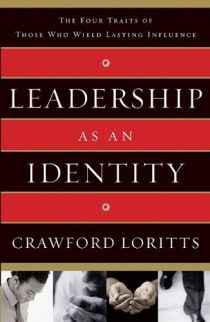
 And… we’re back at NTBI! After a busy-busy summer, we are back in the saddle in Wisconsin and ready for our last year of training here. One of the most exciting parts of this year is that we have been invited to be a part of this year’s NTBI Student Leadership Team. Our leadership “role” will be Sports Department and Campus Life Events Team. Additionally, we were able to go through the Leadership Training Program they have for student leaders.
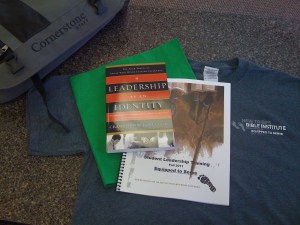
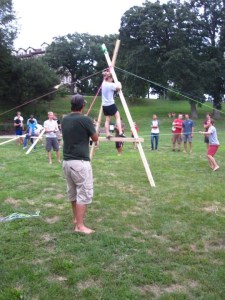


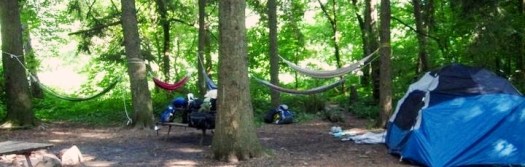
 For the last 4 days we all went camping together at a lake in east Wisconsin. This gave us a chance to get to know the other leaders and staff in a relaxed fun setting. The lake was beautiful and the weather was perfect.



 If you grew up in multiple cultures yourself or are interested in supporting MKs… then you’ll have to check out the new




 These MK Transition Retreats are held in the US in three different locations where they have the opportunity to learn to understand their story, share their story, and live their story.
  pete'n'bree